
Zinc Market to Reach $ 45,260 Million by 2035 as Infrastructure Galvanizing and Battery Innovation Reshape Demand

Zinc Market (2026 - 2035)
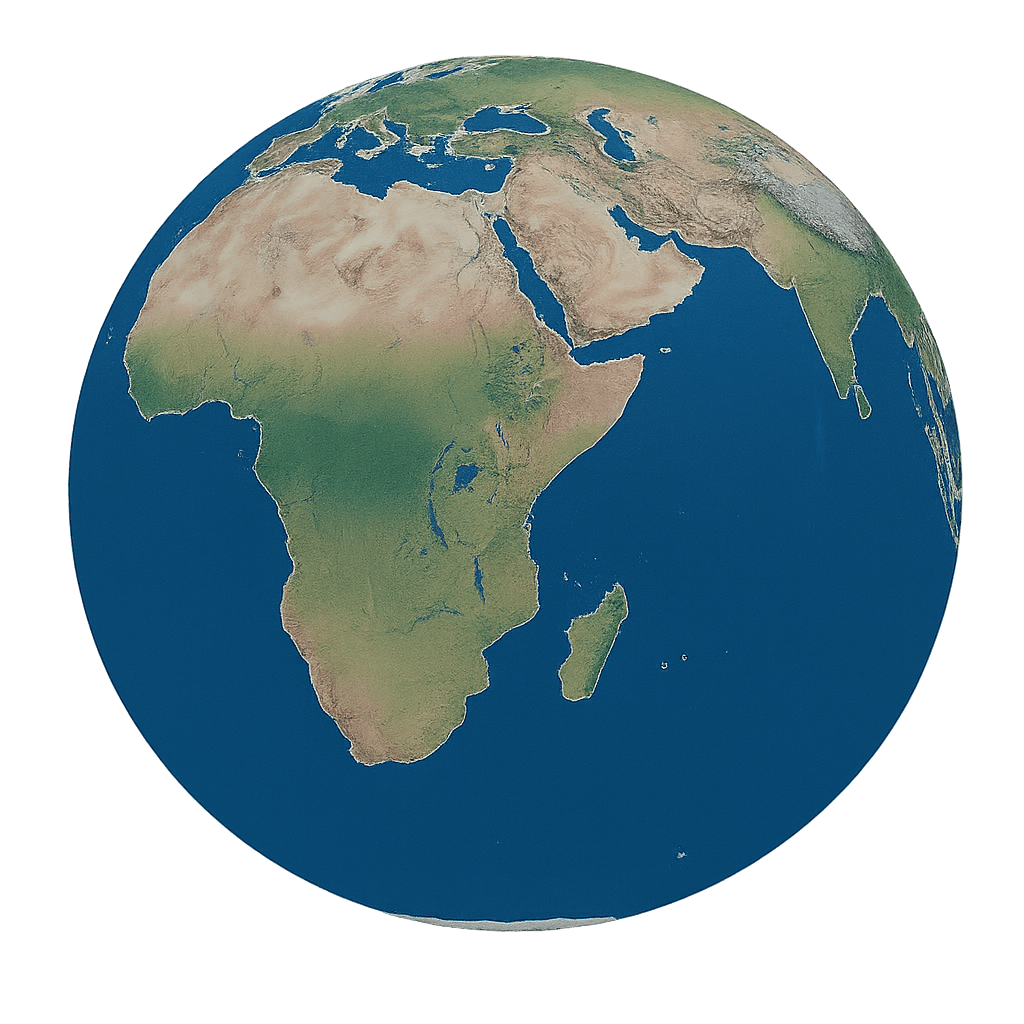
Asia-Pacific led global consumption with 58% of Zinc Market volume in 2025 and is projected to sustain the quickest regional CAGR at 2.65%.
TX, UNITED STATES, July 20, 2026 /EINPresswire.com/ -- According to a comprehensive report by Market Research Future (MRFR), the global zinc market reached an estimated USD 38,200 million in 2025 and is projected to grow from USD 38,854 million in 2026 to USD 45,260 million by 2035, registering a compound annual growth rate of 1.71%. While this growth rate appears modest, it masks a profound structural shift: zinc is transitioning from a pure commodity play to a strategically positioned material for infrastructure resilience, electric vehicle componentry, and next-generation energy storage.The Galvanizing Imperative: Steel Protection as Climate Strategy
The single largest application in the zinc market—galvanizing—captured 56% of volume in 2025, and its dominance is being reinforced rather than eroded by the energy transition. Hot-dip galvanizing extends steel service life by 50–75 years in atmospheric environments, reducing the embodied carbon of infrastructure by eliminating premature replacement cycles. As governments commit to net-zero construction, the lifecycle cost advantage of galvanized steel is becoming a procurement criterion rather than an afterthought.
The U.S. Infrastructure Investment and Jobs Act alone earmarks over USD 550 billion in transport and utility upgrades, much of which requires corrosion-resistant coated steel. The American Society of Civil Engineers estimates the United States faces a USD 2.6 trillion infrastructure gap through 2030, covering bridge decking, highway guardrails, and transmission towers that specify zinc-coated structural steel. India's Bharatmala Pariyojana road program adds approximately 65,000 km of new highways requiring galvanized reinforcing bar, translating to an incremental 200,000 tons of zinc offtake per year through 2028.
China's 14th Five-Year Plan for urban renewal reinforces a durable consumption floor across Asia, while the EU's Renovation Wave targets 35 million buildings by 2030, accelerating demand for galvanized roofing, cladding, and structural elements. The Global Wind Energy Council targets 680 GW of new onshore capacity by 2030, with wind-turbine towers predominantly hot-dip galvanized. Each gigawatt of wind capacity consumes approximately 5,500–7,500 tonnes of zinc in tower, nacelle, and foundation steel protection.
This infrastructure supercycle creates a demand floor that is largely decoupled from consumer cyclicality. Even in recessionary environments, governments maintain capital spending on bridges, water systems, and power grids—making galvanizing a defensive anchor for the zinc market.
Download Report Sample Copy with TOC: https://www.marketresearchfuture.com/sample_request/8003
The Electrification Multiplier: EVs, Die-Casting, and Renewables
The second demand pillar is electrification. Zinc die-cast housings, connectors, and corrosion-barrier coatings are integral to EV drivetrains and solar-racking systems. BloombergNEF projects global EV sales will surpass 30 million units annually by 2030, each vehicle consuming 8–12 kg of zinc in structural and electrical components. While this pales beside the 300–400 kg of copper per EV, zinc's role in battery terminals, motor housings, and chassis fasteners is non-substitutable at current cost points.
The transportation end-user segment generated USD 6,100 million in 2025, and the electrical and electronics segment is projected to register the fastest end-user CAGR at 2.64% through 2035. This reflects not merely EV growth but the broader electrification of the economy—transformer housings, switchgear, and solar mounting systems all rely on zinc-coated or zinc-alloy components for corrosion protection and electrical conductivity.
Zinc oxide's role in varistors—voltage-dependent resistors that protect electronic circuits from power surges—creates a high-value niche within the electrical segment. As grid modernization accelerates and renewable penetration increases, demand for surge protection devices grows proportionally, sustaining zinc oxide consumption at premium pricing.
The Battery Frontier: Zinc-Ion and Zinc-Air Commercialization
Perhaps the most transformative emerging opportunity for the zinc market is energy storage. Pilot deployments by Zinc8 Energy Solutions and Eos Energy Enterprises represent early evidence of an emerging outlet for high-purity zinc powder and zinc-oxide cathode materials. The U.S. Department of Energy's Long Duration Energy Storage Shot initiative aims to reduce the cost of grid-scale storage by 90% by 2030, with zinc-based chemistries among the leading non-lithium contenders.
Zinc-air systems offer 100+ hours of discharge at roughly 40% lower levelized cost than lithium-ion for durations beyond eight hours. Their energy density is lower, making them better suited to stationary applications—grid balancing, renewable firming, and backup power—rather than mobile applications. If commercialized successfully, zinc-ion and zinc-air batteries could create an estimated incremental demand of 90,000–110,000 tons to the zinc market by 2035.
This is not speculative fantasy. Eos Energy Enterprises has deployed zinc-based battery systems at utility scale in the United States, while Zinc8 Energy Solutions is piloting long-duration storage in New York State. The chemistry's abundance, non-flammability, and recyclability address the three most pressing concerns about lithium-ion dominance: supply concentration, thermal runaway risk, and end-of-life waste.
The Circular Economy: Secondary Production as Competitive Advantage
A quiet transformation is reshaping how zinc moves through the value chain. Legacy blast-furnace smelting is steadily yielding ground to hydrometallurgical and solvent-extraction processes that lower energy intensity by 15–20% per ton of output. The European Union's Carbon Border Adjustment Mechanism (CBAM), which began its transitional phase in 2023, is accelerating this shift by penalizing carbon-heavy imports and incentivizing secondary feedstock utilization among European processors.
Secondary production—recovering zinc from electric-arc-furnace dust, brass scrap, and end-of-life galvanized steel—is the fastest-growing production process segment at a 2.95% CAGR. Modern rotary-kiln and Waelz-process plants recover 85–92% of zinc from electric-arc-furnace dust. Galvanized-steel scrap processed through alkaline leaching typically yields 80–88% zinc recovery. European recyclers are already capturing zinc recovery rates above 30%, and tightening landfill restrictions under the EU Waste Framework Directive are expected to push this figure toward 45% by 2032.
Recycled zinc carries a carbon footprint roughly 75% lower than primary production, and CBAM's full levy implementation in 2026 is expected to widen the cost advantage by EUR 80–120 per ton. Smelters in Belgium, the Netherlands, and Germany are investing in electric-arc furnace capacity to process zinc-bearing residues, positioning secondary production as a structurally advantaged segment.
Buy Now: https://www.marketresearchfuture.com/checkout?currency=one_user-USD&report_id=8003
Regional Dynamics: Asia-Pacific Dominates, All Regions Expand
Asia-Pacific commands approximately 58% of global zinc volume, the largest regional share, and simultaneously posts the fastest regional CAGR at 2.65%. China alone accounts for 53% of regional share, with an integrated mine-to-smelter ecosystem that processes domestic concentrates and imports from Australia and Peru. China's refined zinc output exceeded 6.5 million tonnes in 2024, making it the world's largest producer and consumer by a wide margin.
India is the fastest-growing country opportunity at a 2.90% CAGR, powered by the Bharatmala highway program, Smart Cities Mission, and Hindustan Zinc's Rampura Agucha mine—one of the globe's largest integrated zinc operations. India's construction sector is expected to grow at roughly 7% annually through 2030, creating sustained pull for galvanized reinforcing bar and roofing sheets. Japan contributes USD 2,650 million through automotive die-casting and electronics, while South Korea's shipbuilding and semiconductor packaging sustain 8% of regional share.
Europe holds roughly 18% of global value, buoyed by automotive lightweighting mandates and renewable-energy hardware demand. Germany anchors regional demand at 23% of share through automotive OEM galvanizing lines and wind-tower construction. The EU's CBAM and Critical Raw Materials Act designate zinc as a strategic material, creating policy tailwinds for domestic production and recycling. France's nuclear-plant structural steel refurbishment and Spain's solar-racking galvanization add incremental demand.
North America accounts for approximately 13% of global value, where infrastructure rehabilitation and electric-vehicle battery research are opening fresh outlets for specialty zinc compounds. The United States dominates with 68% of regional share, benefiting from the Bipartisan Infrastructure Law's USD 550 billion commitment and Buy America provisions that mandate U.S.-sourced steel for federally funded projects. Canada's critical-minerals strategy lists zinc among priority metals for supply-chain resilience, while Mexico's automotive-sector galvanizing demand sustains USD 620 million in market value.
South America is valued at USD 1,950 million, with Brazil dominating at 56% of regional share through residential construction and agribusiness. Peru's position as a top-five global zinc-ore producer anchors the mining sector, with Nexa Resources operating the Cerro Lindo and Atacocha complexes.
The Middle East & Africa is advancing at a 1.85% CAGR, with Saudi Arabia's Vision 2030 construction megaprojects and South Africa's Zincor refinery in Springs sustaining regional demand. Sub-Saharan Africa represents a long-term frontier: the African Development Bank projects 950 million new urban residents by 2050, and per-capita zinc consumption on the continent is less than one-third of the global average.
Read More: https://www.marketresearchfuture.com/reports/zinc-market-8003
Competitive Landscape
The zinc market exhibits medium concentration, with an estimated Herfindahl-Hirschman Index of approximately 850–1,000. The top five producers account for roughly 35–40% of global refined output, while a long tail of regional smelters and integrated miners serves local markets. Vertical integration—from mine through smelter to semi-finished product—remains the dominant competitive strategy, though secondary processors are carving out margin by targeting low-carbon premiums.
Glencore International AG leads with an estimated 8–11% revenue share, distinguished by vertically integrated global trading and production. Hindustan Zinc Limited captures 7–10% as a low-cost Indian mine-to-metal operator, with its February 2026 MoU with Tripura Group to operationalize a production facility at Zinc Park in Bhilwara marking a milestone in India's first integrated downstream industrial hub for zinc-based value chains. Teck Resources Limited holds 5–8% following its November 2023 sale of steelmaking coal assets to Glencore for USD 6.9 billion, refocusing on copper and zinc growth including the Red Dog mine extension.
Korea Zinc Co., Ltd. captures 5–7% as a technology-driven Korean smelter with precious-metals recovery capabilities. Nyrstar NV accounts for 4–6% as a European multi-metal smelting specialist, while Boliden AB holds 3–5% through integrated Nordic mining and smelting. Nexa Resources S.A. leverages Latin American mine-smelter integration at 3–5%, and Vedanta Limited operates a diversified Indian resources conglomerate at 2–4%.
Related Report
Zinc Sulfate Market https://www.marketresearchfuture.com/reports/zinc-sulphate-market-731
zinc dust powders flakes market https://www.marketresearchfuture.com/reports/zinc-dust-powders-flakes-market-39655
zinc citrate market https://www.marketresearchfuture.com/reports/zinc-citrate-market-31065
Zinc Stearate Market https://www.marketresearchfuture.com/reports/zinc-stearate-market-5198
Zinc Chloride Market https://www.marketresearchfuture.com/reports/zinc-chloride-market-19239
zinc borate market https://www.marketresearchfuture.com/reports/zinc-borate-market-33557
zinc flake market https://www.marketresearchfuture.com/reports/zinc-flake-market-39658
zinc phosphate market https://www.marketresearchfuture.com/reports/zinc-phosphate-market-23838
Market Research Future
Market Research Future
+1 855-661-4441
email us here
Legal Disclaimer:
EIN Presswire provides this news content "as is" without warranty of any kind. We do not accept any responsibility or liability for the accuracy, content, images, videos, licenses, completeness, legality, or reliability of the information contained in this article. If you have any complaints or copyright issues related to this article, kindly contact the author above.
